
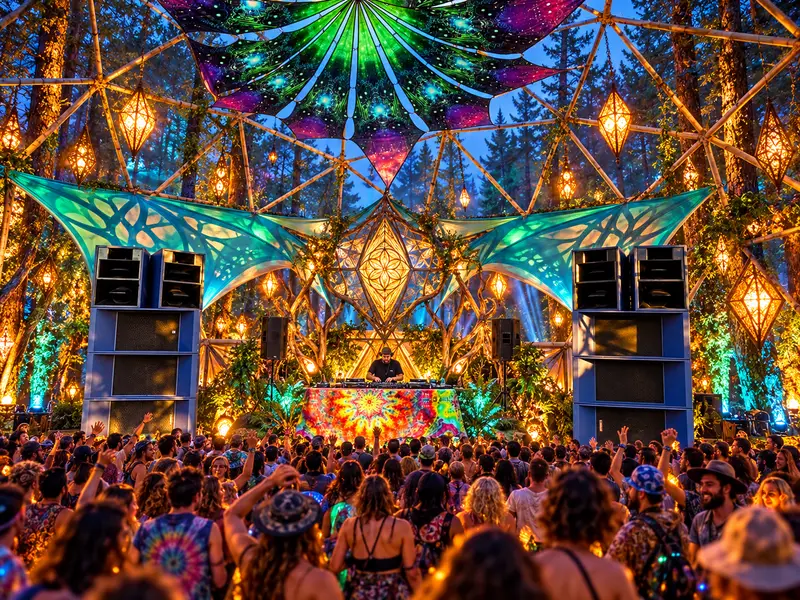
The festival that turns Austin up.
Every autumn, a city that already calls itself the Live Music Capital of the World finds another gear.
For two consecutive weekends, Austin City Limits Music Festival, ACL Fest to anyone who lives here, takes over Zilker Park and the whole town changes tempo. Hotels fill. Rideshares hum. Friends you have not heard from since spring text to ask where to go after the show. And when the last headliner leaves the stage, thousands of people go looking for the same thing: more music.
That is where we come in. Mo'Pro Crew is an Austin sound company with 30 years in music and sound and more than a hundred music events behind us. We rent and run sound for the parties around the festival: after-parties, rooftop sets, backyard shows, hospitality suites and the house parties that somehow end up with a dance floor.
This page is part love letter to ACL, part practical guide. You will learn why the festival matters, what makes a party sound great instead of merely loud, what the City of Austin expects, and how to lock in a full-size system for ACL 2026, on the weekends of October 2–4 and October 9–11.
What ACL does to Austin.
Austin does not need a festival to have live music. On an ordinary Tuesday you can walk into a bar, a patio or a backyard and hear someone better than they have any right to be. The city made it official in 1991, when the City Council proclaimed Austin the Live Music Capital of the World, a slogan that had been in circulation since the mid-1980s.
Now add ACL. Fans who plan their year around the lineup, musicians in town for a showcase, industry people, sponsors and locals who took the weekend off months ago all arrive in groups, and groups need somewhere to be at eleven at night, when the day's official music has wound down but the night is nowhere near finished.
That is why the weeks around ACL are some of the most in-demand for anyone who provides sound in this city. There is only so much gear, and only so many good engineers, to go around. The people who book early get the good rigs. The people who wait end up borrowing a bluetooth speaker.
If you are planning something, decide your date now.
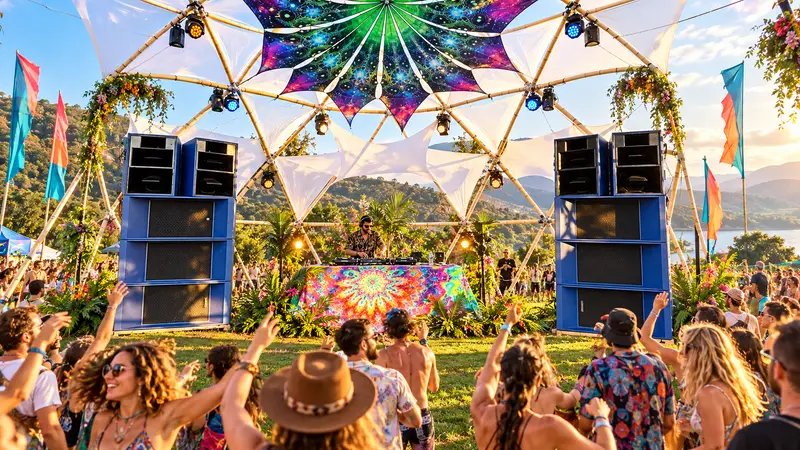
When the gates close, the city keeps going.
A short history of ACL.
The first Austin City Limits Music Festival took place in Zilker Park in September 2002. It was founded by the Austin promoters behind C3 Presents, named after the long-running KLRU/PBS television series taped in Austin, and put together in a matter of months. Published histories say organizers planned for about 25,000 people. More than 40,000 showed up.
For its first decade ACL was a single weekend. On August 16, 2012, the Austin City Council voted to allow two consecutive weekends beginning in 2013, and that has been the rhythm of Austin's October ever since.
Published figures for the 2025 festival put attendance at roughly 75,000 people a day across six days. The festival's own site describes 2026 as more than 100 performances across nine stages, on October 2–4 and October 9–11.
It is a very Austin story: a big idea, a short deadline, and an institution that never lost its connection to a city where music is the point. It also explains why the parties around it have grown into an event of their own.
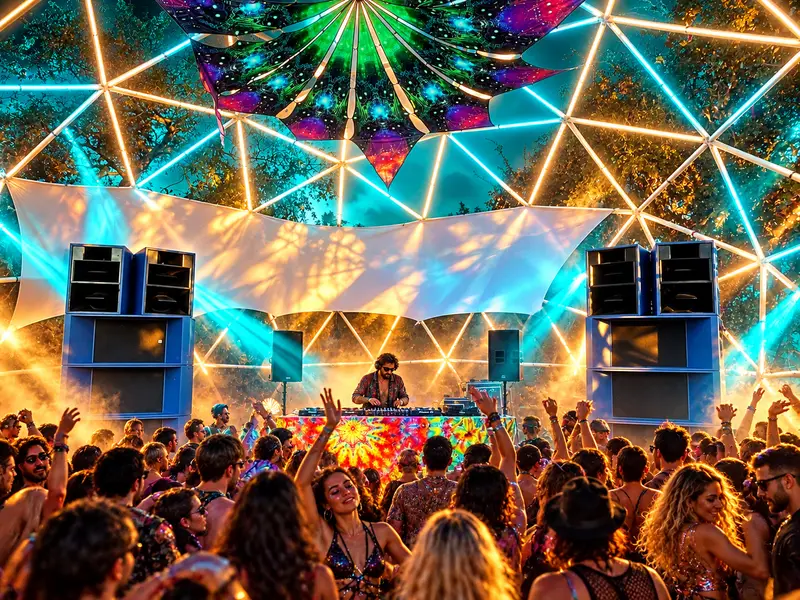
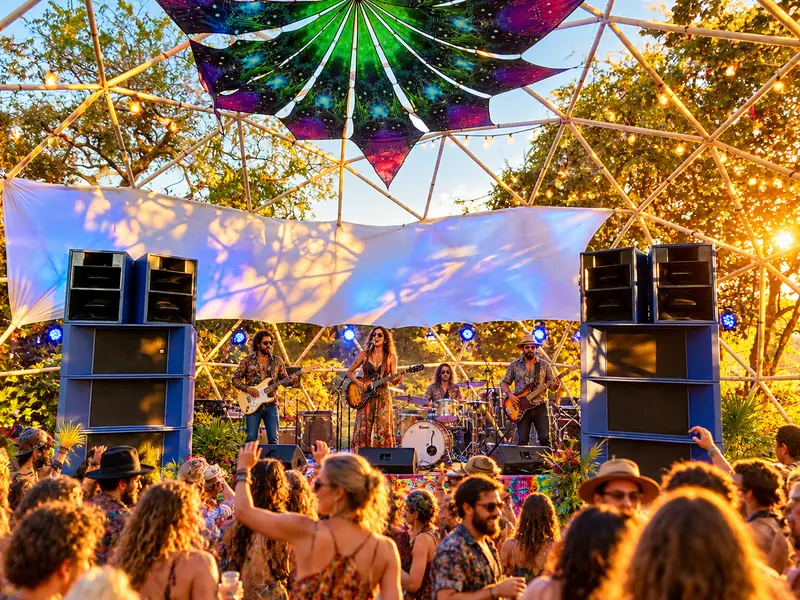
Zilker Park: the perfect stage.
Zilker Park covers more than 350 acres of publicly owned land in south Austin, at the junction of Barton Creek and the Colorado River, with Barton Springs Pool along its edge and the Lady Bird Lake hike-and-bike trail beside it. Most weekends it belongs to swimmers, kite flyers, families and picnics. For two weekends every fall it belongs to music.
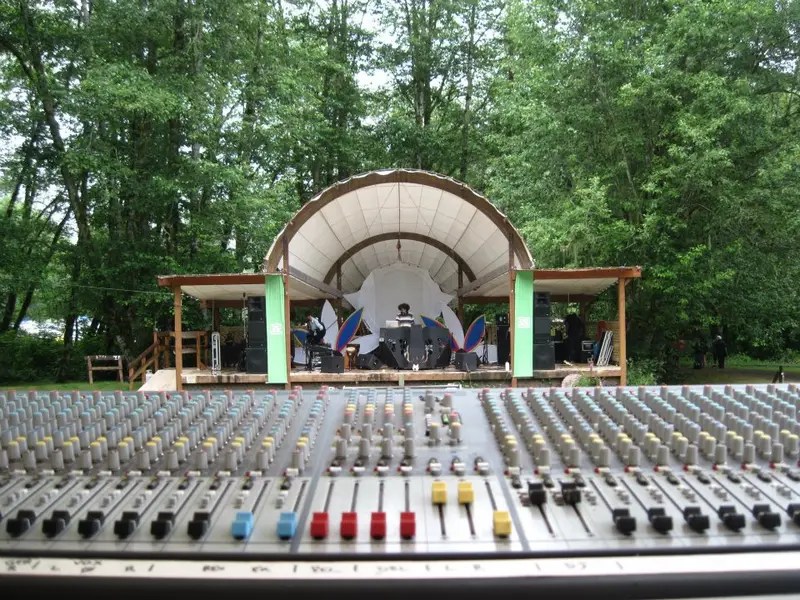
There is something special about hearing a big system in the open air. Outdoors, nothing helps a speaker: every bit of energy has to come straight from the system, and it fades as it travels. A festival stage is a masterclass in doing that well, and it is the standard your own party gets compared to. Guests arrive at your after-party with festival-tuned ears, and they notice right away whether it lives up.
Two weekends, one long week.
That is six festival days, and a full week in between while many visitors stay and the party keeps rolling.
Friday and Saturday nights
The classic after-party nights, and the first to go. If you want a full-size system on one of them, do not wait.
Sunday
The send-off. A Sunday party can start a little earlier and finish at a civilized hour, which suits a showcase or a farewell set.
The week in between
Guests who stay for both weekends, friends who arrive early, and locals who want a party without the crowds. Every night that week is booked at our standard package rates.
This year we are booking ACL weekends at our standard rates, with no festival surcharge. See rigs and prices.
What people actually throw during ACL.
Every ACL-week party is different, but most fall into a few familiar shapes. Knowing yours makes it easier to choose the right system.
The after-party
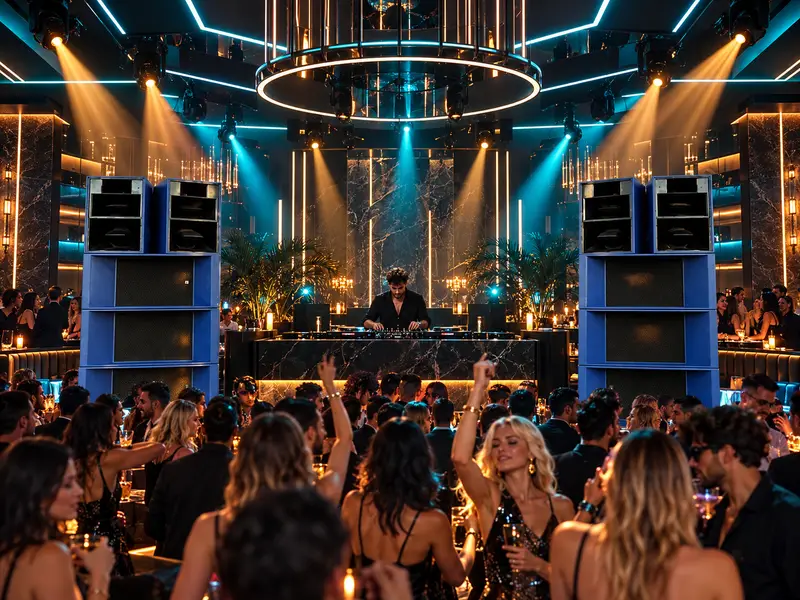
Warehouses, event spaces and big patios with hundreds of people and a hard-hitting DJ or band. This is the full-size rig: real subwoofers, real coverage and headroom for a packed room.
The rooftop or patio set
A smaller, curated crowd with a view. Sound has to carry across the space without spilling onto every balcony nearby, so aim, placement and tuning matter.
The backyard show
Friends, a band in the corner, a few hundred people going from sun into night. Outdoors, so it needs more system than the same headcount would indoors.
The hospitality suite or brand house
Clear speech by day, a full party by night. It needs wireless mics, a proper mix and someone at the desk who can flip the room between modes.
The artist showcase
Several acts, fast changeovers, monitors so the players can hear themselves. This is an engineer's job as much as a rig's.
The group-trip house party
A rented house and a dozen friends from out of town. The smallest crowd here still deserves real low end, not a portable speaker.
Choosing by crowd size. Our packages are sized for roughly 150 people (Getting Bumping), 300–400 (Bit More Bass) up to about 1,000 (Let's Rumble) and up to about 2,000 (Earthquake). Pick the one that matches your crowd, and if you are between sizes, ask us: an outdoor party usually needs the next size up.
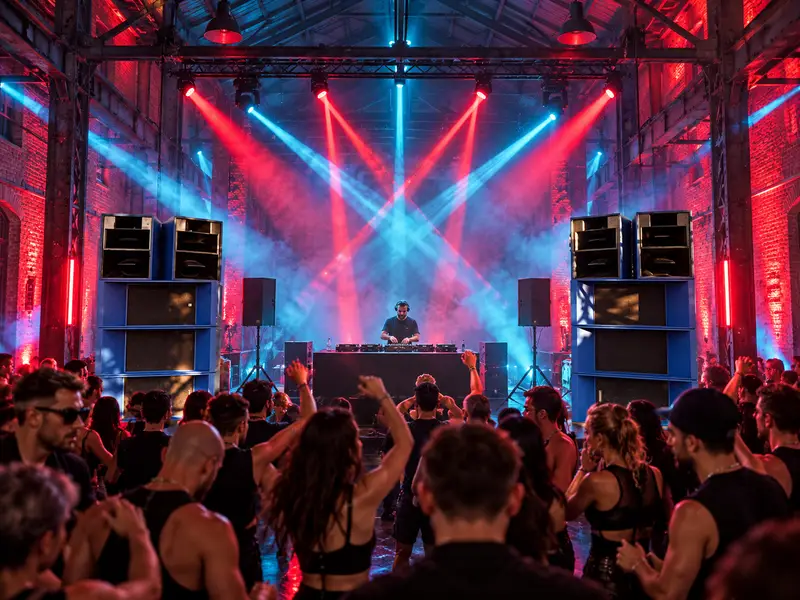
Loud is easy. Clean is the job.
How great sound actually works.
Most people think about sound in one dimension: volume. The people who throw the best parties think in four: low end, clarity, coverage and control. Here is what each means when the crowd is standing right in front of you.
A speaker is not a system
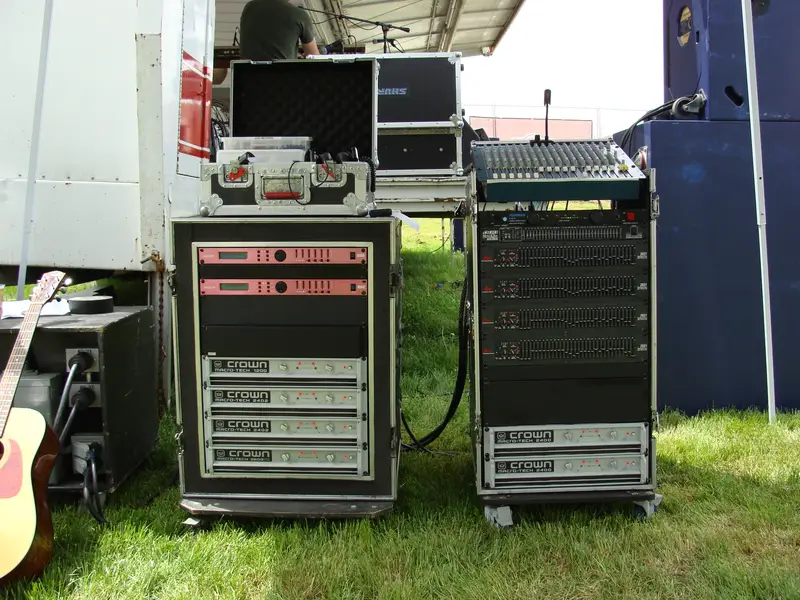
A portable speaker, or a pair of powered boxes on sticks, is built for a small group in a small space. A sound system is designed as a whole: subwoofers for the bottom, full-range tops for everything above, amplification and processing that keep them working together, and someone who tunes it to the room. A great DJ on a weak system still sounds weak.
Why the low end is everything
Bass is something you feel in your chest and your feet, and it turns people standing around into a crowd that moves. Small speakers cannot make that energy, however much power you push into them. Subwoofers exist for that one job.
Horn-loaded subs, and the 21-inch difference
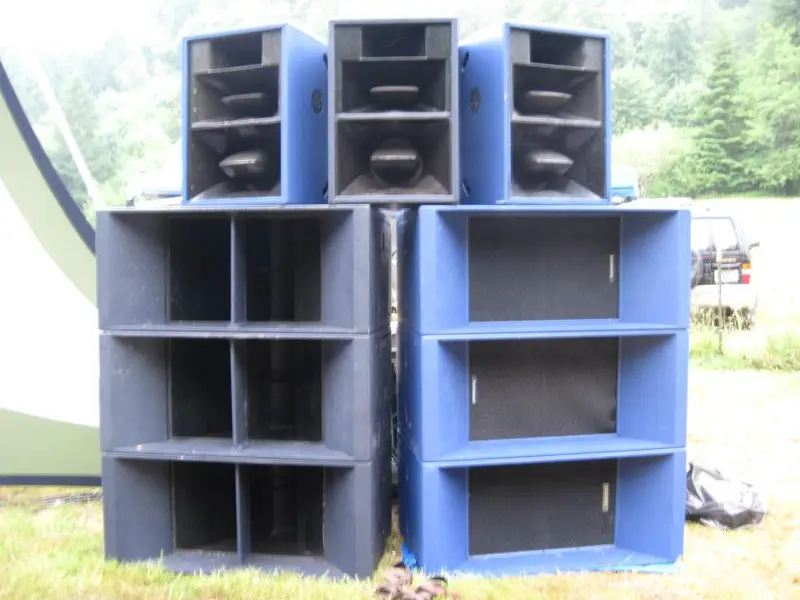
A horn-loaded design shapes the air in front of the speaker so more of its energy leaves the cabinet as useful sound, which generally means more output for the same amplifier power and a punchier feel. Our packages are built around dual 18-inch horn-loaded subs. Earthquake adds four dual 21-inch subwoofers to the full Let's Rumble rig for the deepest low end we can put on a floor.
Tops: where the voices live
Every package pairs its subs with 3-way Turbosound Floodlight tops. A 3-way cabinet divides the sound between separate drivers for lows, mids and highs, keeping vocals clear and cymbals crisp even when the system is working hard. Floodlight is a touring-grade system with Funktion One design roots, and the full rig is rated to cover a crowd of about 1,000.
Outdoors is harder than it looks
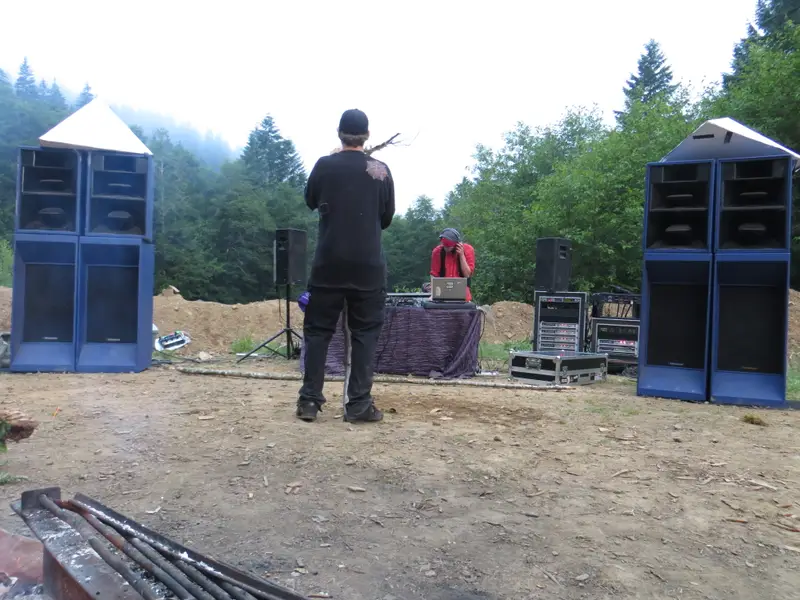
Outside, no walls reflect energy back at your guests, and in open air the level from a single source falls by roughly six decibels each time the distance doubles. That is why the same headcount needs more system outdoors, and why we ask about your space before we recommend a package.
Loud is easy. Clean is the job.
Any system can be turned up until it distorts. A good one stays clean at the volume you need, so people stay all night instead of drifting to the back to save their ears. Power in reserve means the music sounds effortless.
Why the engineer matters
An engineer sets levels so vocals sit above the band, keeps feedback out of the microphones, protects the system and your neighbors from overload, and reacts in seconds when something changes on stage. A DJ with one input can often manage without. A band or a showcase needs a professional. Our front-of-house engineer is $75 per hour.
Our rigs, and what they cost during ACL.
Every package is a standard 4–5 hour music event with delivery within 15 minutes of downtown Austin, setup and breakdown included. For ACL 2026 (October 2–4 and 9–11) all four packages are available at our standard rates, with no festival surcharge. We run one system, so a date is either taken or open, and these are the busiest nights of the year.
Getting Bumping
- 2x dual 18" horn-loaded subs (4x 18" drivers)
- 2x 3-way Turbosound Floodlight tops
- Up to ~150 people
Bit More Bass
- 4x dual 18" horn-loaded subs
- 4x 3-way Turbosound Floodlight tops
- Up to ~300–400 people
Let's Rumble
- 6x dual 18" horn-loaded subs
- 4x 3-way Turbosound Floodlight tops
- Up to ~1,000 people
Earthquake
- 4x dual 21" subs
- 6x dual 18" horn-loaded subs
- 4x 3-way Turbosound Floodlight tops
- Up to ~2,000 people · maximum low end
In real numbers: a five-hour Let's Rumble night on an ACL Saturday with a front-of-house engineer comes to $1,450: $1,000 for the rig plus $450 for the engineer (6 hours, including a one-hour soundcheck). A 50% deposit of $725 locks the date, and the balance is due on the day of the event.
Delivery beyond 15 minutes of downtown is $2 per mile, added to the balance. The deposit is non-refundable, but if you need to change your date we will move it to another open date. Multi-day bookings, lighting and full production are quoted individually.
Every package is on our booking calendar. Hosting an after-party? See our after-party sound rental page.
Austin's sound rules: sort them out first.
Austin loves live music, and it also has rules about how, where and when amplified sound can happen. Nothing kills a party faster than a knock on the door at eleven. Here is the short version, based on what the City of Austin's outdoor amplified sound page currently says.
- Outdoor sound at commercial and non-residential locations needs a permit, according to the city. That means any space not fully enclosed by four walls and a roof.
- The permit type depends on the event. The city describes Outdoor Music Venue permits for regular or recurring sound, Temporary Use permits for one-time sound or events under 50 people, and a Special Events process above 50.
- Residential properties are not eligible for outdoor sound permits. The city lists amplified sound there from 10 a.m. to 10 p.m. at up to 75 decibels, and says it may not be audible beyond the property line from 10 p.m. to 10 a.m.
- The source is Title 9, Chapter 9-2 of the Austin Code of Ordinances.
Good sound helps here. A well-aimed, properly tuned system puts its energy on the dance floor, not in a neighbor's bedroom. That does not replace a permit, but it changes how a party lands.
Your ACL after-party checklist.
Here is the order we would tackle it in if we were hosting.
- Pick your date and venue. Friday and Saturday go first. Confirm the space allows amplified sound and whether it is residential, commercial or already permitted.
- Ask about permits early. Call the venue and the city about what applies to your size and timing, and how long approval takes.
- Book the sound. Pick a rig and a date on our calendar and pay the 50% deposit. The date is yours once it lands.
- Decide who runs it. A DJ with one input may not need an engineer. A band, a showcase or anything with mics and monitors does.
- Send us the details. Address, start time, headcount, indoor or outdoor, stage or floor, and a rough run of show.
- Check power, access and weather. Where the system goes, how we get in, where we park, which circuits are available, and your rain plan. Sound gear and rain do not mix.
- Tell the neighbors. A friendly heads-up and your phone number prevents most complaints.
Then we arrive early, set up, tune the system to the space and are there for soundcheck. After that it is your party, and we come back for the rig when it is over.
Load-in, power and festival-weekend logistics.
Festival weekends change how a city moves. Traffic around Zilker and downtown gets heavy on festival days and parking gets tight, so a few habits help.
- Load in early. Well before the crowds, ideally early afternoon or before. Plan on three hours of setup for our biggest rigs.
- Tell us about access. Loading zones, stairs, gates and narrow driveways change setup time. Send photos if you can.
- Mind the aim and the space. Point the system at your guests and away from the nearest property line, and leave room: a full rig takes real floor space.
Why book a local crew.
Mo'Pro Crew is based in Austin and has been in music and sound for 30 years. We have hosted more than a hundred music events, and spent years DJing, producing and running stages, so we notice quickly when a room is not sounding right.
Being local matters most when everyone else is stretched thin: no freight, no out-of-town truck, no crew learning the city on the fly. We know how long it really takes to cross town on a festival Saturday, and if something changes at four in the afternoon, you can reach us.
How booking works.
- Choose your rig. Any of our four packages, from Getting Bumping to Earthquake.
- Pick an open date on our booking calendar. One system means one event per date.
- Add an engineer if you want one, and tell us where, when the music starts and how many people to expect.
- Pay the 50% deposit to lock it in. The balance, plus any mileage beyond our delivery zone, is due on the day of the event.
Need multiple days, lighting or a full production? Send us the details and we will quote it.
ACL sound rental FAQ.
When is ACL Fest 2026?
Austin City Limits Music Festival 2026 runs October 2–4 and October 9–11 at Zilker Park in Austin, Texas: two consecutive three-day weekends.
How much does sound system rental cost on ACL weekends?
ACL weekends are at our standard rates this year: Getting Bumping $600, Bit More Bass $800, Let's Rumble $1,000, Earthquake $1,600 for a standard 4–5 hour event, including delivery within 15 minutes of downtown Austin, setup and breakdown. A front-of-house engineer is $75 per hour. Larger crowds, multiple days or extra production are quoted.
Are ACL weekend rates higher than usual?
Not this year. We are booking ACL weekends at our standard rates, and every package is available. We run one system, so a date is either taken or open, and festival weekends fill first.
Do you provide sound inside the festival at Zilker Park?
No. We are an independent Austin sound company, not affiliated with the festival or its producers, and we do not work inside the festival grounds. We provide sound for private events around ACL.
Can you run sound for a live band or several acts?
Yes. Add a front-of-house engineer to any booking: $75 per hour, billed for the event plus 1 hour of soundcheck, with a 4-hour minimum.
Do I need a permit for an outdoor party in Austin?
It depends on the venue and the size of the event. The City of Austin requires outdoor sound permits for commercial and non-residential locations, and residential properties follow separate hour and decibel limits. Check the city's outdoor amplified sound page and confirm with the city. This is general information, not legal advice.
How far ahead should I book?
As early as you can. We run one system, so a date is either taken or open, and festival weekends fill first. Online booking closes two days before the event; for anything sooner, use our same-day page and we will give you a fast yes or no.
Can I rent only subwoofers, or add a DJ?
Yes to both. If you have your own system we can add subwoofers to it, and a DJ can play through our rig so one crew handles the music and the sound.
What if it rains?
Sound equipment and rain do not mix, so we need to know your covered-space plan before event day. Tell us when you book and we will advise on placement and protection.
Sources. ACL Music Festival (dates, program); Wikipedia and Zilker Park (history, attendance, park); City of Austin, Outdoor Amplified Sound; KUTX (Live Music Capital). Checked September 25, 2026; figures may change.
Make your night the one they remember.