“How many speakers do I need?” is the question we hear most. The honest answer starts with a few questions that have nothing to do with speakers. Here is the simple method we use, so you can size a PA yourself or know whether a rental quote makes sense.
Step 1: What is it for?
A PA does one of three jobs, and each needs something different:
- Speech: toasts, presentations, ceremonies. You need clarity and a good microphone more than power.
- Background music: dinner, cocktail hours. Even coverage at low volume.
- Dance or live music: power, low end and coverage all matter. This is where subwoofers earn their spot.
Most events need more than one. A wedding has all three. That is why “just get a speaker” often falls short.
Step 2: How many people?
This is the biggest number that drives the size. Roughly:
| Crowd | Typical system |
|---|---|
| Up to about 50 | A pair of good powered speakers, maybe one sub |
| 50 to 150 | Two tops and two subs |
| 150 to 400 | Four tops and four subs |
| 400 to 1,000 | A large system: multiple subs and tops for even coverage |
| 1,000+ | Festival production, quoted per job |
Our packages follow that ladder: Getting Bumping covers about 150, Bit More Bass about 300 to 400, Let’s Rumble about 1,000, and Earthquake about 2,000.
Step 3: Indoors or outdoors?
Outdoors changes everything. Inside, walls and ceilings bounce sound back to the crowd, so every speaker helps every listener. Outdoors, sound leaves and does not return. Wind, open space and ambient noise all work against you.
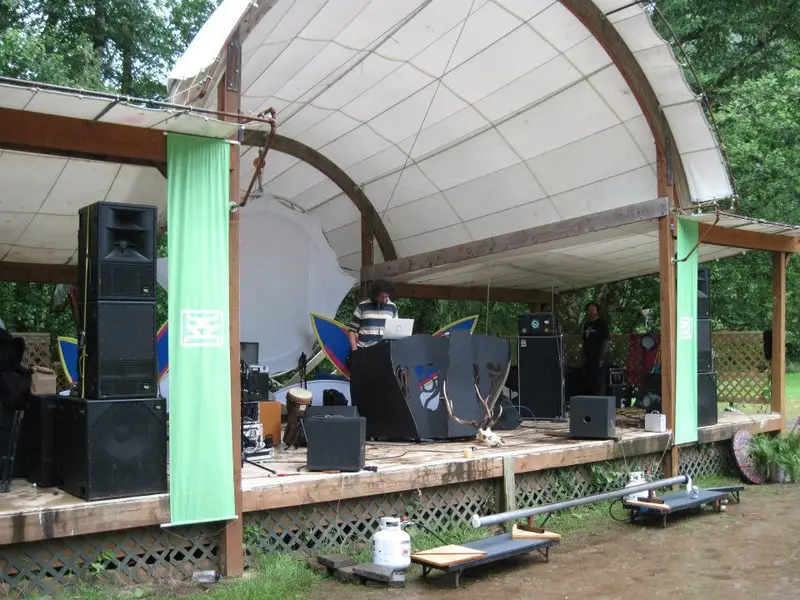
A simple rule: outdoors, size the system for roughly double the crowd you would size for indoors. A 200-person backyard party is a 300 to 400 person system. If you are outside, see our outdoor sound system rental page.
Step 4: What kind of low end do you need?
Bass is the difference between a party and a background. A pair of speakers alone can play music, but they cannot move air the way a subwoofer can. Subs also take the load off the tops, so the whole system sounds cleaner and louder without straining.
A few notes:
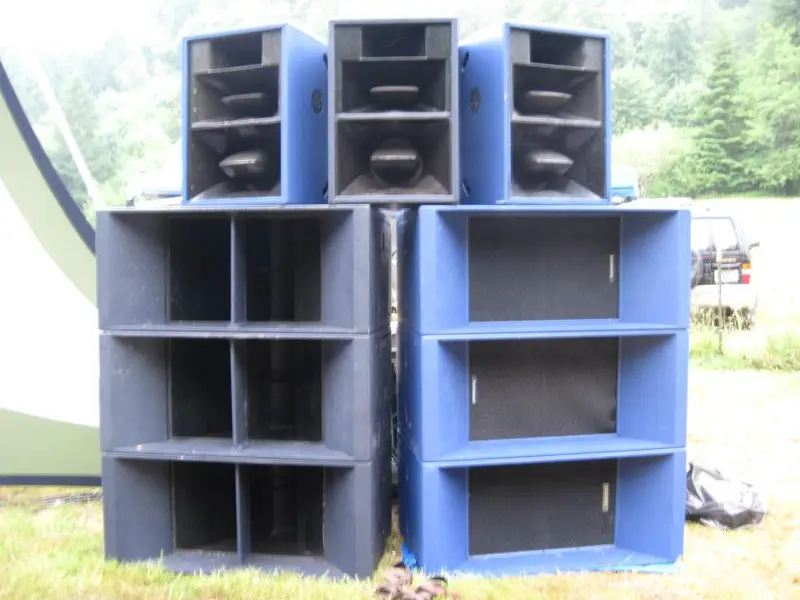
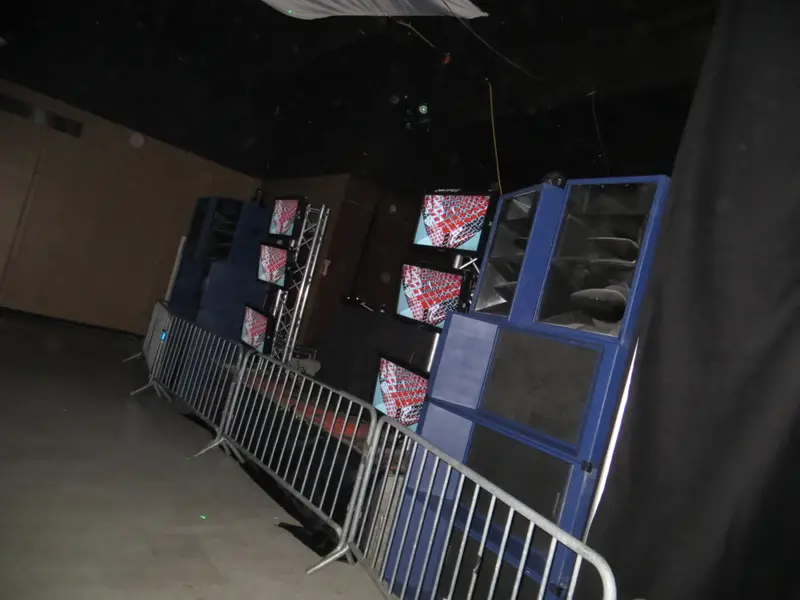
- Horn-loaded subs are more efficient. They turn more of the amplifier power into sound, so they hit harder and cleaner. That is why we use them. See horn-loaded subwoofers explained.
- Bigger drivers (21-inch) move more air at the very lowest frequencies. That is what our Earthquake package adds.
- Live bands need subs less than DJs do, but kick drums and bass guitars still benefit.
Step 5: What plugs in?
List every source and microphone you need:
- A DJ controller or laptop
- Wireless handheld or lavalier microphones
- Wired instrument inputs for a band
- A phone for background playlists
Each one needs a channel on the mixer. A basic DJ set-up uses one stereo input. A five-piece band uses ten or more.
Step 6: Who is running it?
Somebody has to set it up, tune it, and ride the volume during the night. If that somebody is you or a friend, choose a simpler system with a smaller mixer. If you would rather enjoy the event, add an engineer. Ours is $75 an hour with a four-hour minimum. See why a sound engineer is worth it.
Step 7: What is the power situation?
Powered speakers need outlets. Big systems need dedicated circuits. Ask the venue about:
- How many outlets and on which breakers
- Extension cable distance
- Any generator requirements outdoors
If you are unsure, send us photos or the address and we will work it out.
Speaker placement basics
Where the speakers go matters almost as much as what they are.
- Speakers in front of the microphones. Always. A microphone that can hear the speaker will squeal.
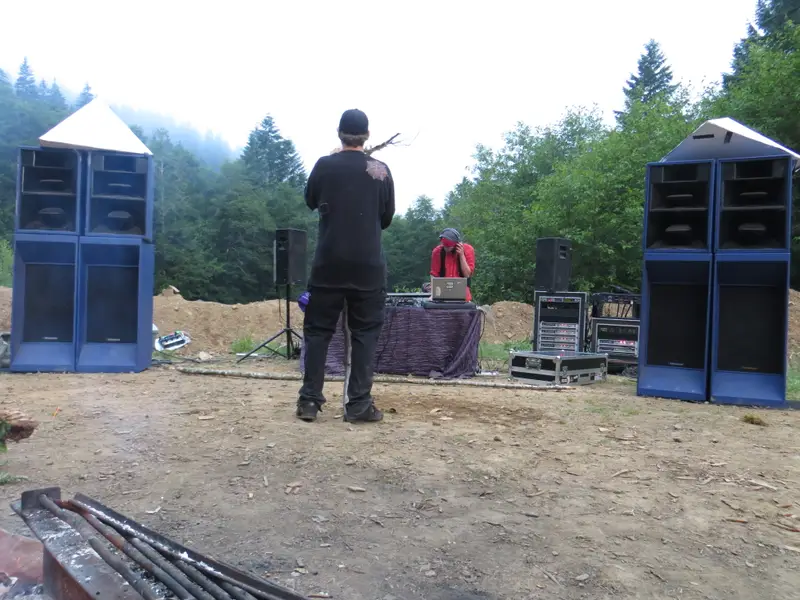
- Raise the tops. Sound travels over the front row to reach the back. Put tops on stands or on top of the subs, and aim them at the last row.
- Subs on the ground. Low frequencies couple to the floor and spread naturally. Placing subs together makes them louder and more focused.
- Symmetry helps. A left and a right stack, a bit inside the edge of the stage or dance floor, give even coverage.
- Mind the neighbors. If sound limits matter, aim away from houses and keep low frequencies under control.
Volume without pain
Loud is not the goal. Clean is. A good system can be loud at the dance floor and comfortable at the bar, because it is sized for the space and pointed at the crowd.
A few habits keep it that way:
- Soundcheck with real music, not a test tone.
- Walk the room. Stand at the back, at the sides and near the speakers.
- Turn the tops down before the subs up. Bass carries the energy and tops can be gentle.
- Check again when the crowd arrives. People absorb sound. The room changes when it fills.
Quick sizing cheat sheet
| Situation | Start with |
|---|---|
| Backyard dinner, 40 guests, background music | A pair of powered speakers |
| Birthday party, 100 guests, dancing | Two tops, two subs |
| Outdoor wedding, 150 guests | System sized for 300 |
| Block party, 500 guests | Large rig with multiple subs |
| Live band, 200 guests | Full PA, monitors, engineer |
| Festival stage | Quoted |
If your event does not fit in the table, send us the details and we will size it.
The mistakes we see most
- Sizing for the guest list, not the space.
- Skipping subs and then wondering why the music sounds thin.
- Placing speakers behind the microphone and getting feedback.
- Renting the loudest box instead of the best coverage.
- No soundcheck, and no time for one.
- Nobody in charge.
Should you rent or buy?
If you host one or two events a year, renting a system delivered and set up will cost less than owning, storing and hauling one. If you run events every week, buying might pay off. Either way, it helps to know what you actually need, which is what this guide is for.
A short rental checklist
- Date, address and time window
- Crowd size
- Indoors or outdoors
- DJ, band, speeches or all three
- Number of microphones
- Do you want an engineer?
That is enough for us to size it and quote it. See how much sound system rental costs in Austin or go straight to booking online.
Watts are cheap. Coverage is the job.
Quick
answers.
How many speakers do I need for 100 people?
Indoors, two quality tops and one or two subwoofers cover 100 people comfortably for music and speech. Outdoors, size up, because there are no walls to help.
Do I need subwoofers?
For dance music, hip-hop, live bands and anything with a kick drum, yes. For speeches and quiet background music only, you can skip them.
What is the difference between a PA and a sound system?
Nothing important. PA stands for public address, and people use the two terms interchangeably. A rental PA usually means speakers, amplification, a mixer and microphones.