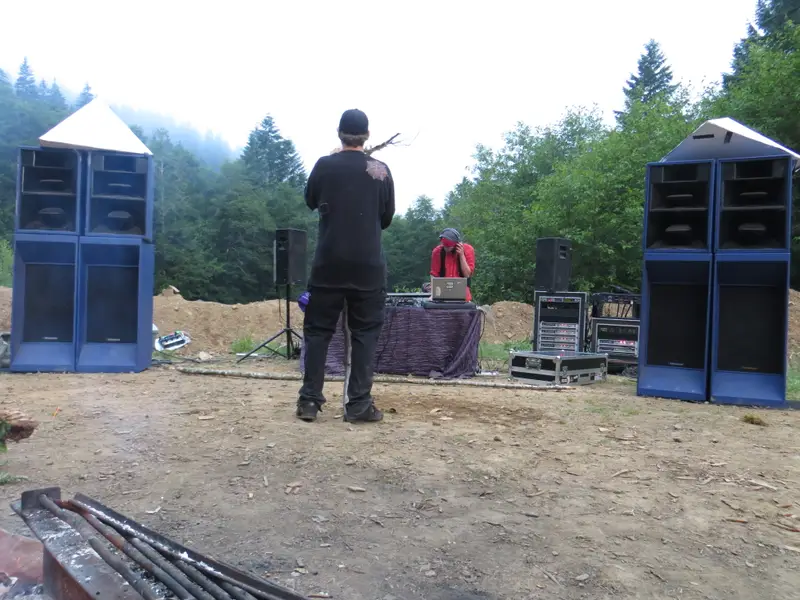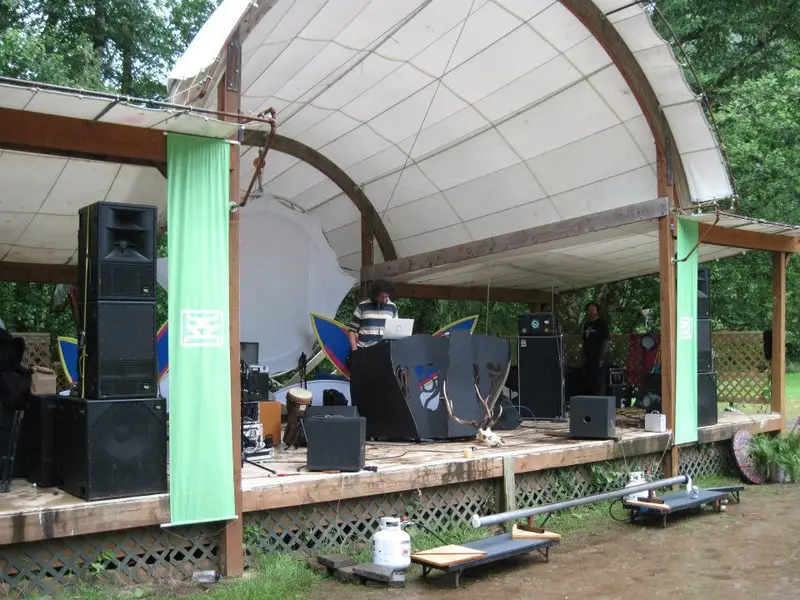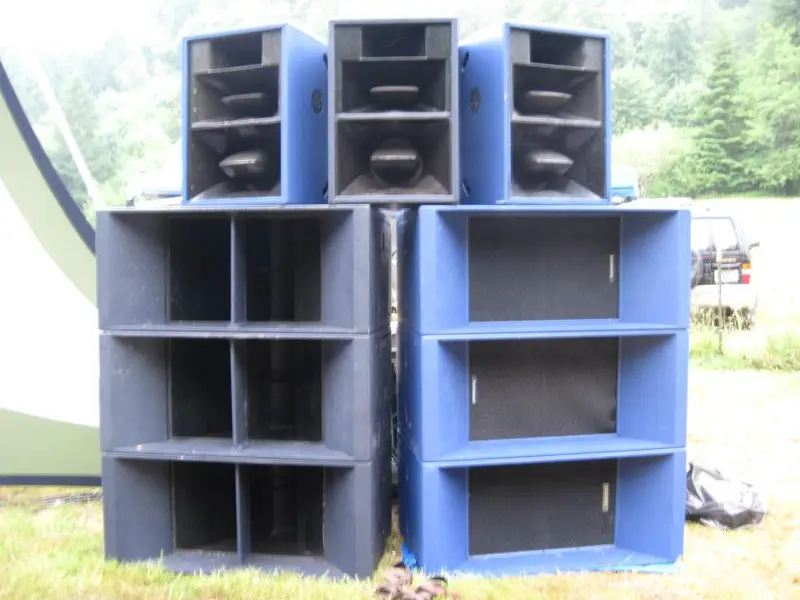
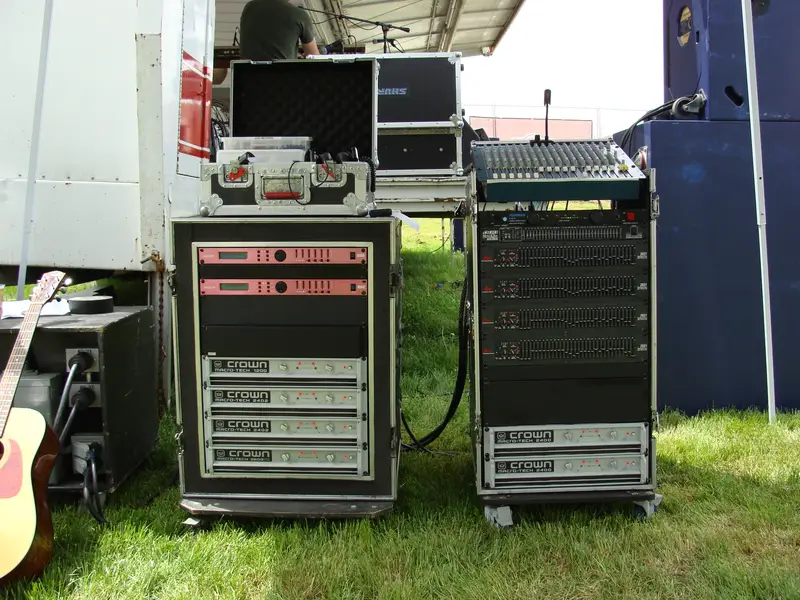
For an outdoor party, size your sound system for roughly double the crowd you’d plan for indoors. A 150-guest backyard event needs what a 300-person indoor system would carry. That single rule of thumb solves most of the guesswork, and the rest of this comes down to why it’s true and how to adjust it for your actual yard.
Why outdoor sound needs more system
Indoors, walls, ceilings and floors are doing work for you. Sound waves that miss the crowd on the way out bounce off a surface and get a second chance to reach someone. A room holds energy in.
Outdoors, none of that exists. Sound that misses the crowd just keeps traveling until it fades out over open air. There’s no ceiling to reflect the highs back down, no back wall to reinforce the bass. Every bit of level you want the last row to hear has to get there directly, with nothing helping along the way.
That’s the entire reason the “double it” rule works. It isn’t a marketing number. It’s what happens when you remove every reflective surface a room normally gives you for free.
The guest-count table, adjusted for outdoors
| Guest count (outdoors) | Equivalent indoor size | Typical system |
|---|---|---|
| Up to 75 | 150 indoors | Two tops, one to two subs |
| 75 to 200 | 150 to 400 indoors | Two to four tops, two to four subs |
| 200 to 500 | 400 to 1,000 indoors | Large system, multiple subs and tops |
| 500+ | 1,000+ indoors | Festival-scale production, quoted per job |
This is a starting point, not a formula with no exceptions. Two things move the number further: yard depth, and whether people are dancing.
Yard depth matters as much as guest count
A long, narrow backyard with guests spread 80 feet from the speakers needs more system than a wide, shallow patio with the same headcount packed in close. Distance is the enemy of outdoor sound in a way it isn’t indoors, because there’s no reflected energy filling in the gaps behind the front rows.
If you know the longest distance from where the speakers will sit to your farthest guest, that number matters more than the guest count alone. Fifty feet is comfortable for a mid-size outdoor system. A hundred feet or more usually means stacking speakers higher, adding a second pair, or both.
Dancing changes the math
Background music at a garden party and a dance floor at the same party are two different jobs. Dancing means bass you can feel, sustained volume for hours, and a crowd that’s moving and absorbing sound differently than a seated one. Add at least one size tier if there’s a real dance floor involved, even at the same guest count.
What actually goes wrong without enough system
The failure mode outdoors isn’t usually total silence. It’s worse than that: the system plays, sounds fine near the speakers, and gets progressively thinner and quieter the farther back you stand, until the last third of your guests can barely tell there’s music at all. Nobody complains loudly about it. They just drift toward the bar and the night gets quieter than it should have been.
Undersizing shows up as a slow leak of energy from the back of the crowd forward, not a dramatic failure. That’s exactly why it’s easy to underestimate: the DJ and the front row have a great time, and nobody tells the host the back half of the yard was flat.
Wind, weather and other outdoor variables
Wind moving against the direction of your sound shrinks your effective coverage, sometimes significantly. You can’t control which way the wind blows on the day, which is the real argument for building in headroom rather than sizing exactly to the guest count on a calm-weather assumption.
Humidity and temperature affect high frequencies slightly, but wind is the variable that actually changes an event night to night. A system with margin to spare handles a breezy evening the same as a still one. A system sized to the exact minimum doesn’t.
Noise limits and your neighbors
Residential areas, HOAs, and some venues have their own noise expectations, separate from anything about the system itself. That’s a real conversation to have with your venue or property management before the event, not something a speaker count solves. If your event is in Austin city limits specifically, ask us when you book and we’ll flag what we know for that address.
A simple way to check your plan
- Measure or estimate the longest distance from the speaker location to your farthest guest.
- Double your guest count and find that number in the indoor sizing table.
- Add one tier if there’s dancing, and another half-tier if the yard is long and narrow.
- Confirm subs are included if there’s any dance music or a live band.
If that leaves you between two sizes, round up. Extra headroom outdoors costs less than a flat, quiet back half of the yard.
When to just ask
If your event doesn’t fit neatly into a table, send us the guest count, yard layout and event type and we’ll size it properly, the same way we do for every outdoor booking. See also how to choose a PA system for your event for the full sizing method, and our outdoor sound system rental page for packages built for exactly this.
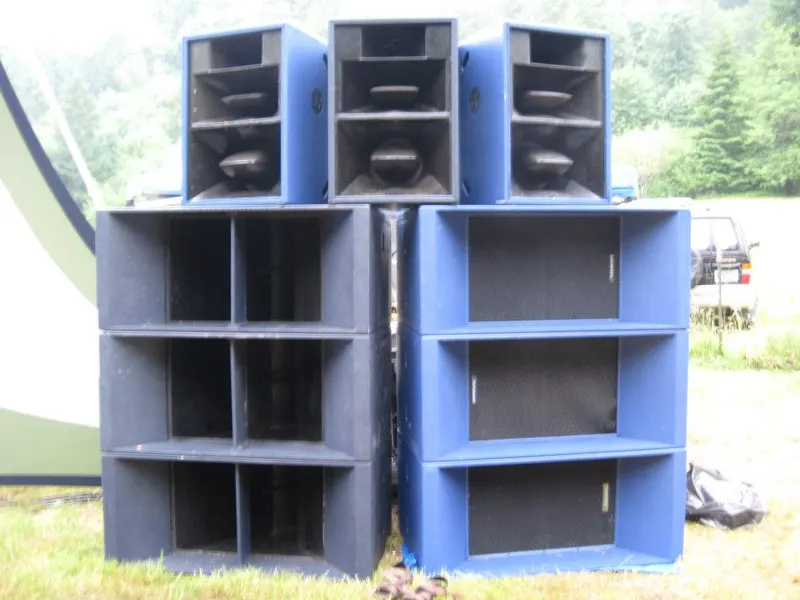
Indoors, the room helps you. Outdoors, you're on your own.
Quick
answers.
How many speakers do I need for 100 people outdoors?
Size it like an indoor system for 200 to 300 people: two to four tops and two to four subs, depending on yard depth and whether there's dancing.
Do I need subwoofers for an outdoor party?
For anything with dance music, hip-hop or a live band, yes. Bass is the frequency range outdoor spaces lose the most, so subs matter more outside than in.
Will one powered speaker cover my backyard?
One powered speaker can cover background music for a small, tight gathering, roughly 20 to 30 people close together. Beyond that, or with any dancing, you need a real pair with coverage, not a single box.
Does wind actually affect the sound?
Yes. Wind blowing from the crowd toward the speakers pushes sound back at them and shrinks your coverage. Wind blowing from the speakers toward the crowd can help, but neither direction is something you control, so a system with headroom to spare handles both.