
A multi-act stage runs on planning, not luck. The crew collects a stage plot from each act ahead of time, sets the stage so the next act is ready as the last one leaves, checks every input before they play, and has a sound engineer at the mixing position for the whole day. The aim is a changeover the audience barely notices.
Here is how it works, and what you can do as the host to help.
Before the day: stage plots and an input list
Every act has different needs. A DJ needs a booth and a handful of inputs. A band needs a mic or direct input for each instrument and voice, plus monitors.
A stage plot is a simple diagram showing where each performer stands and what they need. An input list names every source that needs to reach the mixing console. Ask each act to send both ahead of time. With them in hand, the crew can plan the stage layout and the changeover before load-in.
The soundcheck
The soundcheck is where the system and the engineer get set up. Our packages recommend 3 hours of setup for the larger rigs, and a front-of-house engineer is billed for the event plus a 1-hour soundcheck. For a festival, headliners often check first and openers last, or the reverse, depending on the schedule. Agree on it in writing.
Running order matters
The lineup affects how smooth the day is.
| Order choice | Effect |
|---|---|
| DJ, then band | The band needs a full stage setup after a quick DJ set. Allow time |
| Band, then DJ | Fast to follow. The DJ can set up while the band packs |
| Band after band | Needs the most time. Shared backline helps |
| A DJ between bands | A useful buffer that fills the changeover |
A DJ set between live bands is a classic way to keep music playing while the stage is changed behind it.
How the changeover runs
- The next act is staged off to the side, with gear ready to go on.
- The outgoing act clears and the crew resets inputs and monitors.
- A line check runs through each input.
- The engineer sets a rough mix while the act gets ready.
- The act plays and the engineer adjusts in real time.
When it works, the audience hears music, a short pause and more music.
Monitors
Performers need to hear themselves. A band’s monitor mix is separate from what the audience hears, and it is a real part of the setup. It can be floor wedges or in-ear monitors. Our live band sound rental page covers what a band needs.
Who mixes
For a single DJ, the DJ can often run the system. For several acts, a dedicated engineer is the difference between a day that runs and one that does not. Our post on what a front-of-house engineer does explains the role. An engineer is $75 an hour with a 4-hour minimum plus a 1-hour soundcheck.
What you can do as the host
- Collect stage plots and input lists from every act at least a week out
- Share the schedule with the sound crew
- Build realistic changeover times in. If in doubt, add a few minutes
- Name one person on your team as the stage manager
- Confirm the power and load-in plan using our festival power checklist
For a deeper look at how the rig itself works, read how festival sound systems work. To plan your own lineup, start with our festival sound system rental page.
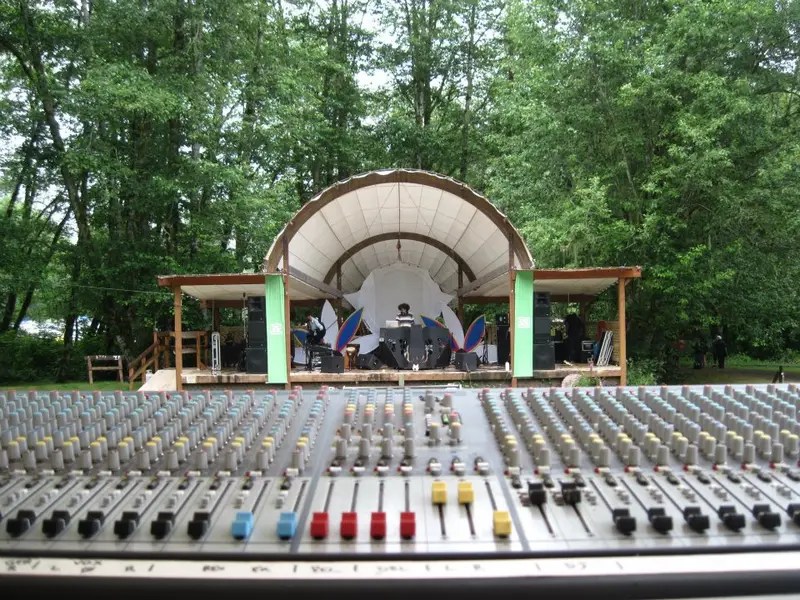
The best changeover is the one nobody notices.
Quick
answers.
How long should a changeover between bands take?
It depends on the acts. Plan it with your sound crew from the stage plots. A DJ swap is quick, a full band is much longer, and a schedule that ignores that will run late.
What is a stage plot?
A simple diagram of where each performer stands and what they need, such as inputs, monitors and power. The crew uses it to set up and to plan the changeover.
What is a line check?
A quick check of each input to confirm it works before the act starts, so problems are found before the audience hears them.
Do you need a sound engineer for several acts?
Yes. Someone has to mix each act and run the changeovers. A front-of-house engineer is $75 an hour with a 4-hour minimum plus a 1-hour soundcheck.
Can DJs and live bands share one stage?
Yes, with planning. They need different inputs and monitors, and the order of the lineup affects the changeovers.