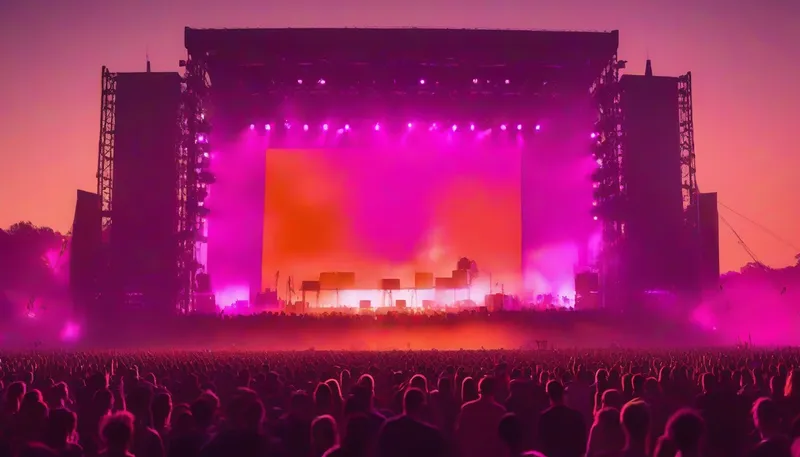
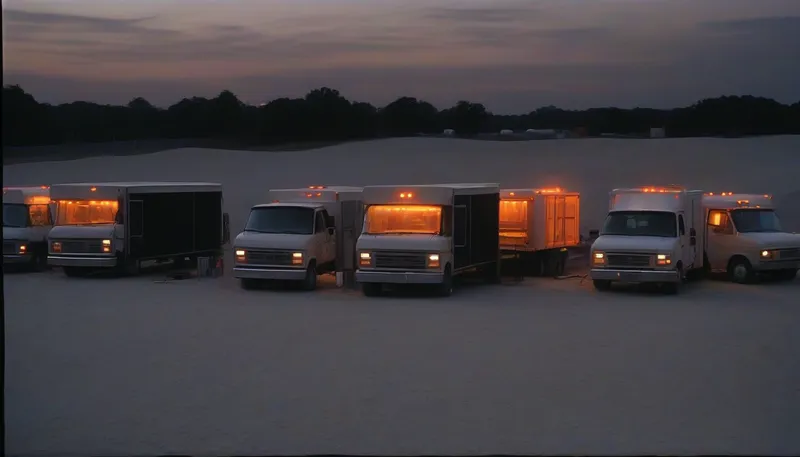
Before a festival or large outdoor event, confirm four things in writing: where the power comes from, how the trucks reach the stage, how much setup and soundcheck time you have, and when the sound must stop. Most sound problems on show day start with one of those four, long before anyone plugs in a speaker.
This is the checklist we would want every host to run through before booking.
1. Power
A sound system is only as good as the power behind it. Large rigs draw a lot, and a weak or shared supply is a common cause of trouble.
Ask:
- Who supplies power, the venue or a generator company?
- Where does it connect, and how far is that from the stage?
- Does anything else share that supply, such as lighting, food vendors or a second stage?
- Is there a backup plan if it fails?
The farther the stage is from the power point, the longer the cable runs, and the more planning it needs. Tell us what you know and we will tell you what we need.
2. Truck access and load-in route
Speaker stacks are heavy. Getting them from the truck to the stage is a real task.
Ask:
- Where can a truck park, and how close is that to the stage?
- Is the ground firm, or soft grass, gravel or sand?
- Are there gates, steps or tight turns?
- Is there a time window for vehicles on site?
Soft ground and long carries add time, and sometimes need extra crew. A site visit or a photo of the route helps.
3. Setup and soundcheck time
Our packages are built around a standard 4 to 5 hour music event. The bigger packages need more setup time:
| Package | Price | Recommended setup time |
|---|---|---|
| Let’s Rumble | $1,000 | 3 hours |
| Earthquake | $1,600 | 3 or more hours |
These are recommendations from our package notes. Larger festivals, multiple stages and full production are custom and planned with you. Add the soundcheck window on top. A rig that has to rush its soundcheck usually sounds like it, and there is no recovering that once doors are open.
4. Sound limits and curfew
Venues, neighborhoods and cities can set limits on how loud and how late amplified sound may run. Ask your venue or the city directly, and get the answer in writing. Do not rely on a rumor or a forum post. If the event is in the city, ask us when you book and we will flag what we know for that address.
5. Staffing
Who is mixing, and for how many hours? A front-of-house sound engineer is $75 an hour with a 4-hour minimum plus a 1-hour soundcheck. For a multi-act day, we recommend one. See what a front-of-house engineer does.
6. Weather
Plan for wind, heat and rain. Wind affects coverage, and rain needs cover for gear and cable. Ask what the venue’s rain plan is, and whether the sound plan moves with it. If the sound is under a tent or cover, tell us.
7. Delivery and distance
Delivery within 15 minutes of downtown Austin is included. Beyond that, it is $2 per mile one way, added to the balance. See how delivery and mileage work.
A one-page version to send your venue
- Date, set times, load-in window
- Address and truck access
- Power source, location and capacity
- Stage location and size
- Curfew and sound limit
- Rain plan
- Contact on site
Send that to your venue and to us. It shortens every call after.
Planning something bigger than our packages?
If you are running a festival or a multi-stage event, start at our festival sound system rental page. For a corporate event version of this list, see our corporate event sound checklist. You can also send your details through the booking page.
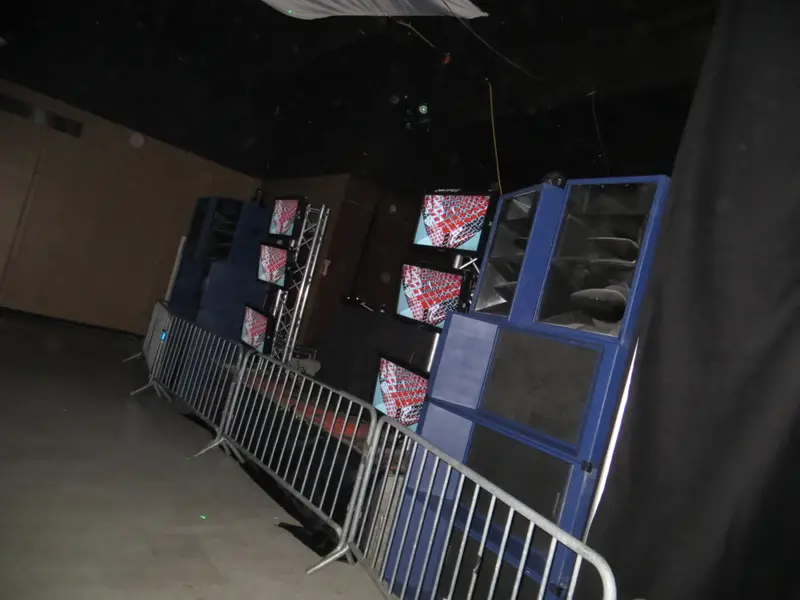
Sound problems rarely start on stage. They start at load-in.
Quick
answers.
How much setup time does a festival rig need?
Our Let's Rumble package recommends 3 hours of setup time, and Earthquake recommends 3 or more. A multi-stage or full production setup takes longer and is planned job by job.
Who provides power at a festival?
It depends on the site. Some venues provide it, some rely on generators. Ask early who supplies it, where it connects and how far it is from the stage.
What happens if the power is not enough?
The system either runs below its potential or trips. That is why we ask for the power plan before the day, not at load-in.
Can you start setup the night before?
Sometimes, if the site is secure and the venue allows it. Ask us when you book and we will plan around the site.
What is the biggest mistake hosts make at load-in?
Booking too little setup time. A rig that has to rush its soundcheck sounds like it.