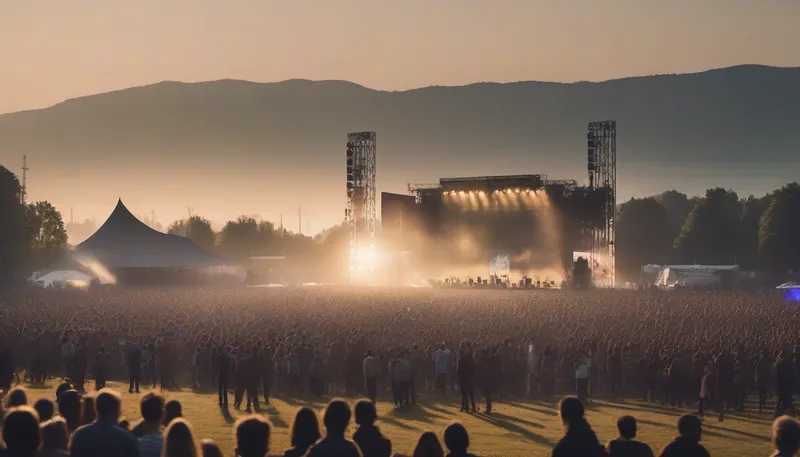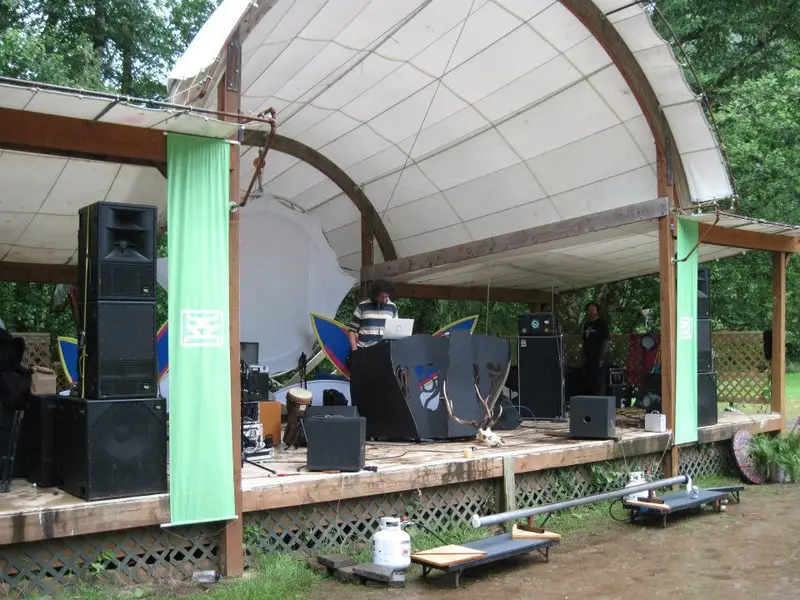
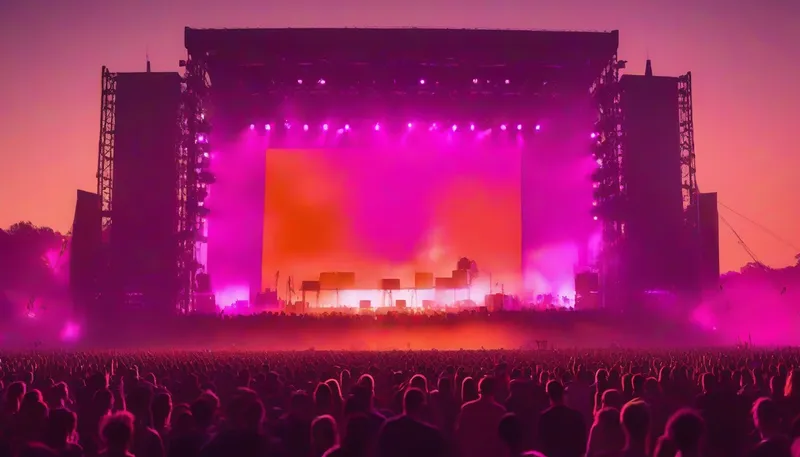
A festival sound system is a set of speakers, mixing gear and power built to deliver the same clear, strong sound to a very large open crowd, from the first row to the last, across several acts. It is not simply a bigger party rig. It has more parts, each with a specific job, and a person whose full-time job is to run it.
Here is what each part does, and why the differences matter when you are choosing a rig for a big outdoor event.
The five jobs of a festival rig
| Part | What it does |
|---|---|
| Mains | The main speakers on either side of the stage, aimed at the crowd. They carry the mids and highs |
| Subwoofers | Handle low frequencies, the bass you feel. Usually placed at the stage, sometimes in a row |
| Delays | Extra speakers placed farther back in a long crowd so the back rows get clear sound |
| Front of house (FOH) | The mixing position and console in the crowd where an engineer shapes what the audience hears |
| Monitors | Speakers or in-ear systems for the performers, with their own mix |
Behind all of that sits the part nobody photographs: power distribution, cable runs and the plan for where everything connects.
Why a party rig falls short at festival scale
A party rig is built for a crowd packed close to a stage. At a festival, the crowd is deeper and wider, and it is outdoors. Three things change.
Distance. Sound gets quieter with distance. A basic rule of physics: every time you double the distance from a speaker, the level drops by about 6 dB. A listener 100 feet back hears much less than one 25 feet back, from the same speaker. That is why you do not simply turn the system up. Turn it up enough for the back row and the front row gets hurt. See how delay towers solve this.
No walls. Outdoors, there is nothing to reflect sound back. Our guide on how many speakers an outdoor party needs explains why outdoor jobs need roughly double the system an indoor job does for the same crowd.
Many acts. A party has one DJ. A festival stage has a schedule. Each act has different needs, and changeovers are short. That is a staffing and planning problem more than a gear problem. See our post on festival changeovers.
Mains and subs: what you actually hear
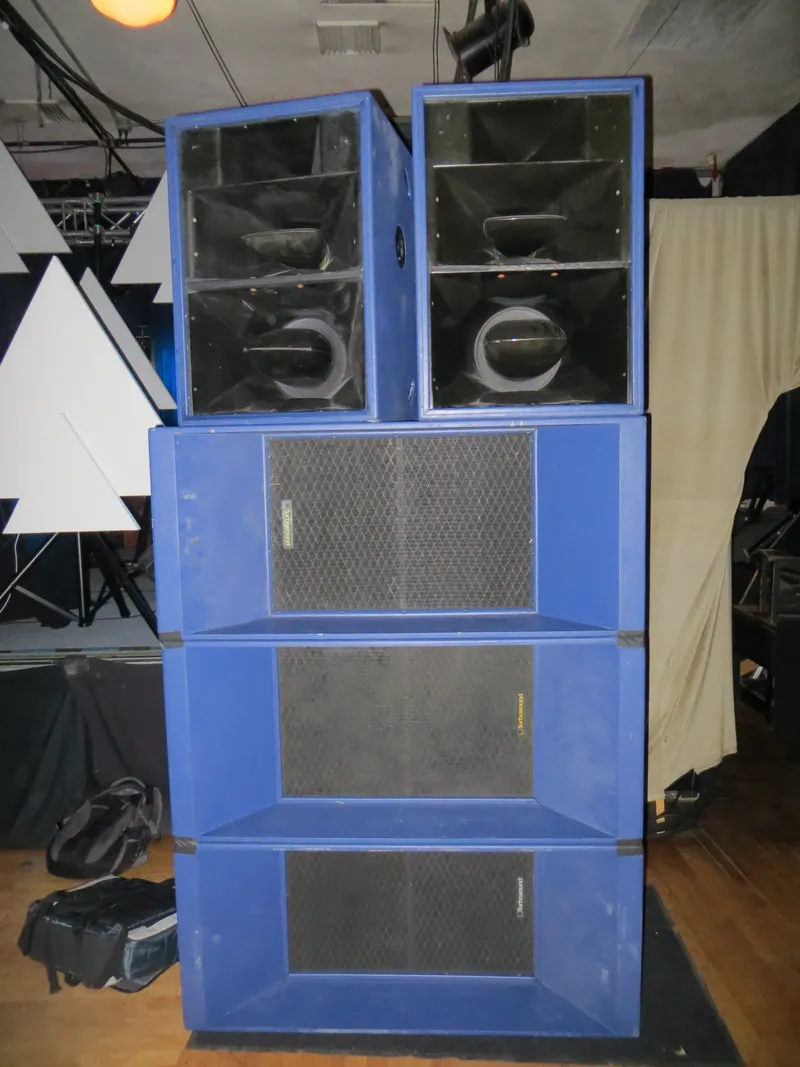
The mains carry voices, guitars, synths and the top of the drums. Ours are 3-way Turbosound Floodlight tops, which split the sound across three drivers so each handles the range it does best. For the story of that design, read what a Turbosound Floodlight is.
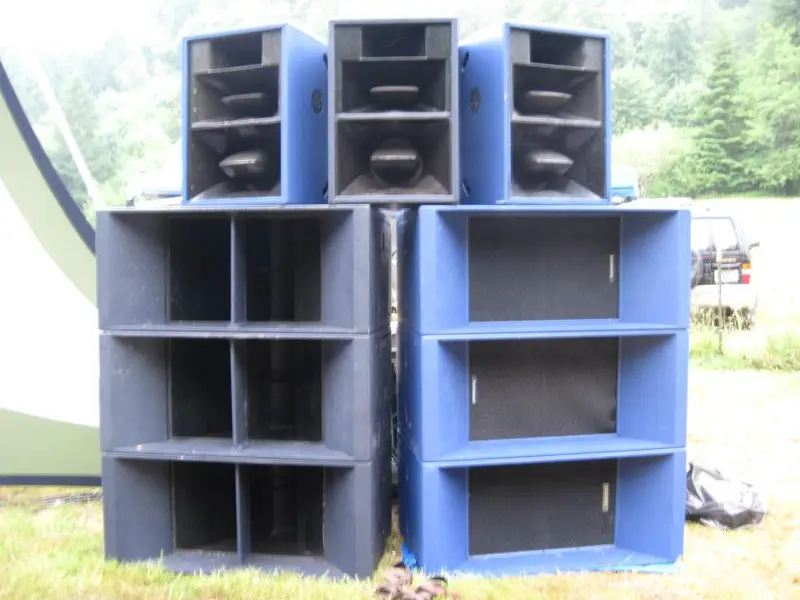
Subs handle everything low. Ours are horn-loaded, which means the speaker uses a horn shape to push more low-end output for the same power. That is why a stack of them carries across a big open field. The long version is in horn-loaded subwoofers, explained.
Front of house and monitors
The FOH engineer sits in the crowd, listens to what the audience hears and adjusts. Without one, a rig tends to sound fine near the stage and wrong farther back, and nobody on stage can tell.
Monitors are a separate system. Performers need to hear themselves, and the sound pointed at the audience is no use to them. A monitor mix can be wedges on the floor or in-ear systems. For a band, this is a big part of the job. See live band sound rental.
Where our packages fit
Our standard packages scale with the crowd:
| Package | Price | Built for |
|---|---|---|
| Let’s Rumble | $1,000 | Up to about 1,000 people |
| Earthquake | $1,600 | Up to about 2,000 people, maximum low end |
Each includes delivery within 15 minutes of downtown Austin, setup and breakdown. Prices are before Texas sales tax and any mileage. Larger festivals, multi-day events, multiple stages, lighting and full production are custom and quoted.
What to ask any festival sound provider
- How many people is the rig built for, and how do you cover the back rows?
- Who mixes, and for how many hours?
- What is the plan for monitors?
- What power do you need, and what do you bring?
- How long is setup, and what is the soundcheck window?
If the answers are vague, that is information.
Next step
If you are planning a festival or large outdoor event, start with our festival sound system rental page, or send us the details on the booking page. Mo’Pro Crew is an Austin production company with 30 years in sound and music.
A festival rig has one job. Make the back row feel the front row.
Quick
answers.
What are the main parts of a festival sound system?
Main speakers on each side of the stage, subwoofers for low end, sometimes delay speakers further back, a front-of-house mixing position, stage monitors for the performers, and the power and cabling that tie it together.
What is front of house?
Front of house, or FOH, is the mixing position out in the crowd where the engineer controls what the audience hears. It is separate from the monitor mix the performers hear on stage.
Why do festivals use so many subwoofers?
Low frequencies spread in all directions and get no help from walls outdoors. More subs, placed with care, are how you keep bass strong across a big open crowd.
Can a party sound system be used for a small festival?
For a crowd up to about 1,000 or 2,000 people, our Let's Rumble and Earthquake packages are built for exactly that. Past that, or with multiple stages, it is a custom production.
Do you need an engineer at a festival?
Yes. With several acts and quick changes, someone has to mix, not just plug in. A front-of-house engineer is $75 an hour with a 4-hour minimum plus a 1-hour soundcheck.